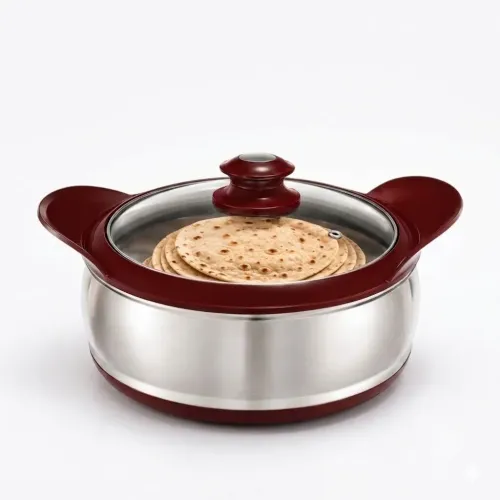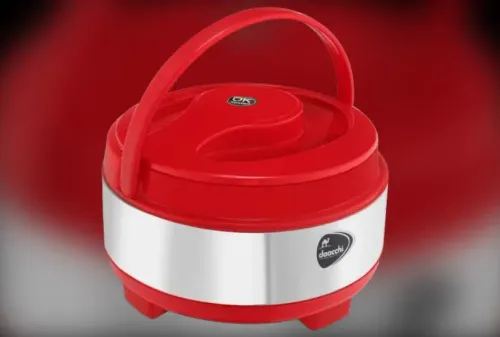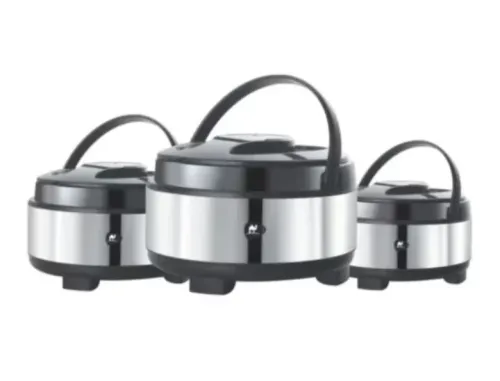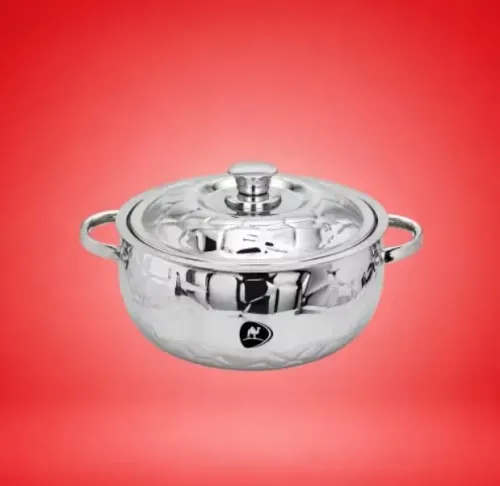
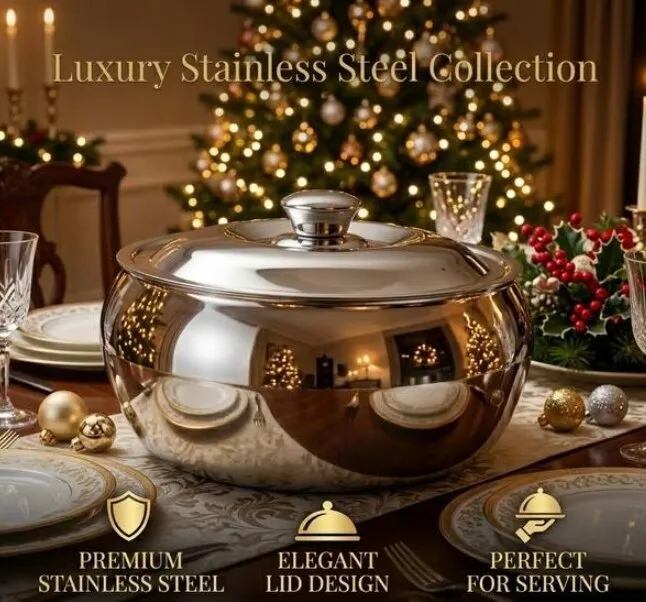
A nominal 3-litre vessel does not tell you whether it will fit your shelves, serve the portions you need, or keep food within a safe holding range. Use the specifications, test methods and purchasing checks below to compare models and approve the right casserole for your restaurant operation.
Key takeaways
- Ask for brim capacity and recommended working capacity separately.
- Confirm steel grade, wall construction and heat-retention test results.
- Match portion yield and holding temperature to each service point.
- Test the lid, cleaning process and delivered condition before acceptance.
Confirm the real capacity, dimensions and portion yield
A 3000 ml stainless steel casserole for restaurants in Delhi is a nominal 3-litre vessel, not automatically a 3-litre serving capacity. Request both brim capacity and recommended working capacity; a recessed inner bowl, headspace requirement or spill allowance will reduce the volume you can safely carry.
Ask the supplier to provide these figures in the stainless steel casserole product details:
- Internal bowl diameter, external diameter, opening diameter, base diameter and overall height with the lid fitted.
- Tare weight, handle projection, lid-knob height, stacking clearance and the clearance needed to lift the lid without hitting a shelf.
- Recommended working capacity in millilitres, plus the number of units that fit on your service tray, bain-marie, delivery crate and storage shelf.
- Lid-on dimensions and packed dimensions, because handles and lids can prevent close stacking even when the bowl itself fits.
Calculate portion yield from working capacity, not the 3,000 ml label. Divide the stated working volume by your actual ladle size: a 200 ml serving from 2,400 ml yields 12 portions, while a 150 ml serving yields 16.
Leave enough headspace for dal, gravy, rice or curry to move during carrying without sloshing over the rim.
Reject a quotation that gives only “3 litre” and an approximate diameter. Request a dimensioned drawing or sample measurement before approving shelf and service-counter fit.
Specify the steel grade, wall construction and heat-retention evidence
A 3000 ml stainless steel casserole in Delhi should name the food-contact grade, not merely say “stainless steel.” Ask for the grade of the inner bowl, outer shell, lid, handles, hinges and fasteners. Grade 304 is a common food-service choice for general corrosion resistance; 201 costs less but is not an equivalent substitute.
Grade 316 offers stronger resistance where salty or acidic foods and frequent washing are concerns.
Construction determines both retention and repairability. Require the inner-wall and outer-wall materials, wall thickness, insulation type, air-gap width or foam density, and whether the base is sealed. Compare the options directly:
| Construction | Heat-retention implication | Practical trade-off |
|---|---|---|
| Single-wall | Little insulation; food cools quickly | Lightest and easiest to repair |
| Double-wall air-gap | Better separation from room temperature | Moderate weight; inspect for a sealed cavity |
| Foam-insulated | Stronger resistance to heat transfer | Heavier; damaged insulation is difficult to replace |
| Vacuum-insulated | Highest potential retention | Costlier; dents or seal failure can end performance |
Do not accept “keeps food hot” as evidence. Request a test showing starting food temperature, fill volume, lid position, ambient temperature, and readings after 30, 60 and 120 minutes. The stainless steel casserole product details should state brim capacity and working capacity, because a recessed bowl and required headspace reduce the usable 3 litres.
Also confirm that the vessel is for holding and serving, not direct burner, induction or oven use, unless the maker explicitly rates it.
Match the casserole to foods, service points and temperature controls
A restaurant serving casserole suits a 3-litre vessel when the food moves from the kitchen to a nearby buffet, banquet table or service counter in one batch. Use it for dal, gravy, curry, biryani, pulao and cooked vegetables; avoid relying on it for high-volume replenishment or long-distance delivery without measured temperature data.
Treat 3,000 ml as brim capacity, not saleable capacity. Leave headspace for ladling and carrying: a 2,400–2,700 ml working fill gives roughly 9–10 portions at 250 ml, or 12–15 smaller buffet portions. Calculate units from your actual ladle size, then add a second vessel if one batch will empty before the next refill.
- Do not place a presentation casserole on gas, induction or in an oven unless the maker expressly rates it for that use; transfer food after cooking.
- Hold hot food at 60°C or above, checking the centre with a calibrated probe rather than judging warmth by touch.
- Record the temperature at filling, after transport and during service. Discard or reheat food according to your food-safety plan if it enters the danger range.
- For a 3000 ml stainless steel casserole for restaurants in Delhi, request a retention test showing starting temperature, load, ambient temperature, opening frequency and elapsed time.
| Food or arrangement | Suitable use | Planning control |
|---|---|---|
| Dal or curry | Buffet or counter service | 250 ml ladle; refill before the working fill is exhausted |
| Rice or biryani | Banquet or table service | Use a wider opening; monitor centre temperature after each serving peak |
| Cold raita | Short counter service only | Keep below 5°C with active chilling; insulation alone is not refrigeration |
Check the lid, cleaning requirements and acceptance test
A 3,000 ml vessel passes acceptance only when it survives a filled carry test, repeated cleaning and lid inspection. Measure water into the bowl to confirm both brim capacity and the supplier’s stated working capacity; a nominal 3-litre volume may leave less room for dal, gravy or rice.
- Fit the lid fully and lift the filled restaurant serving casserole by its handles. Reject it if the lid shifts, the gasket leaks, the knob flexes or the handles loosen.
- Inspect the lid rim, gasket groove, inner seam and bowl rim for sharp edges, gaps, weld pits or food-trapping recesses.
- Confirm that any steam vent or pressure-relief feature is designed for the product. Do not seal a vessel that the maker has not rated for pressure.
- Run the sample through the planned hand-washing or dishwasher process, then check for gasket swelling, odour retention, peeling finish and loss of lid fit.
- Record the permitted detergent and sanitiser. Avoid steel wool, abrasive powders, concentrated salt residue and chlorine bleach, which can cause scratches, tea staining or pitting.
- Get replacement-part numbers, gasket dimensions, lid compatibility, prices and delivery lead times in writing. Cover knobs, handles, feet, lids and silicone gaskets, not only the steel bowl.
Keep the stainless steel casserole product details with the acceptance record. A water test confirms capacity and leakage, not heat retention; test holding temperature separately. Reject any supplier that cannot explain cleaning limits or spare-part supply.
Compare Delhi suppliers on delivered service value, not appearance alone
A delivered quote is the useful number when you buy casserole for food service in Delhi. Require the unit price, GST rate and amount, freight to your kitchen, unloading charges, minimum order quantity, delivery lead time, and dent-or-breakage replacement terms in writing.
| Supplier | Compare | Ask for |
|---|---|---|
| Supplier A | Lowest delivered price | GST invoice, freight inclusion, MOQ and delivery date |
| Supplier B | Higher price | 304 or 201 grade declaration, insulation construction and warranty |
| Supplier C | Local stock | Replacement time, spare lids, handles and after-sales contact |
| Supplier D | Custom supply | Sample cost, approved dimensions, production lead time and payment terms |
Your quotation should identify the 3000 ml stainless steel casserole in Delhi by internal diameter, external diameter, opening diameter, height with lid, base diameter, tare weight, handle projection and stacking clearance. Add the number that fits your tray, shelf or delivery crate.
Approve one physical sample before ordering. Measure its brim and working capacity, inspect the lid seal and welds, weigh it, test carrying with a normal fill, and record photographs signed by both parties. Reject substitutions unless the supplier confirms them in writing.
Ask whether the sample is single-wall, double-wall air-gap, foam-insulated or vacuum-insulated, and confirm the food-contact steel grade. Aarav Enterprises should be compared using the same checklist, not a polished photograph. A supplier who replaces transit dents quickly can deliver more value than one offering a lower ex-warehouse price.
Related product
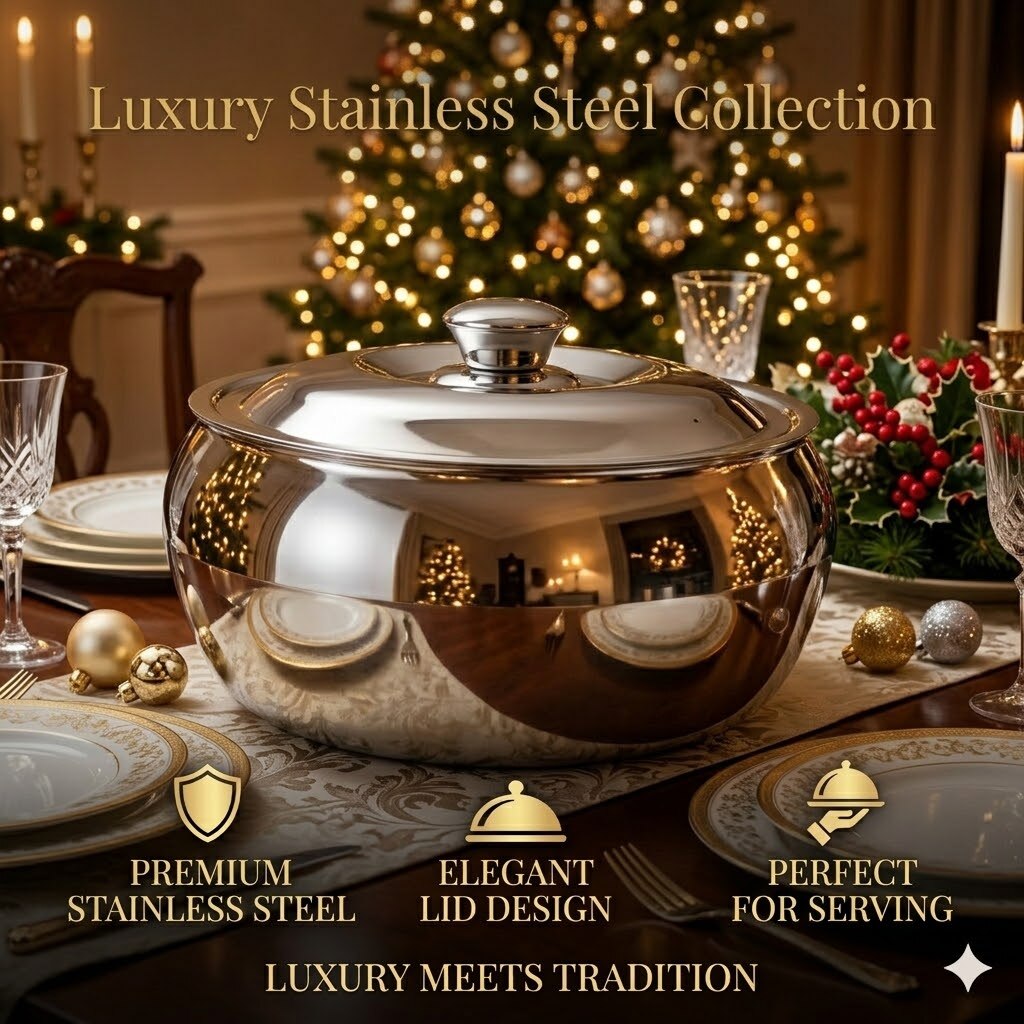 | Stainless Steel Kettle Stainless Steel Casserole (3000ml) Stainless Steel Casserole (3000ml) The DAACCHI Stainless Steel Casserole (3000ml) is a premium double-wall insulated serving bowl designed to keep... View product → |
Frequently asked questions
Is a 3000 ml stainless steel casserole a full 3-litre serving vessel?
No. Treat 3000 ml as nominal brim capacity until the supplier confirms usable working capacity. A recessed bowl, headspace and spill allowance reduce the safe serving volume.
What steel and construction details should Delhi restaurants request?
Request the stainless steel grade, wall construction, base design and written heat-retention evidence. Ask for a test method, starting temperature, holding time and measured final temperature rather than accepting appearance as proof.
Which foods and service points suit a 3000 ml restaurant serving casserole?
Match the vessel to the food’s volume, texture and holding temperature. Check its suitability for rice, gravies, curries or dry dishes at buffet counters, banquets and table service, then set temperature controls for the food rather than relying on insulation alone.
How should a restaurant inspect and accept the casserole on delivery?
Check the lid fit, handle security, dents, welds, surface finish and stated capacity. Run a water-volume test, inspect cleanability around seams and hinges, and record defects before accepting the shipment.
How should restaurants compare casserole suppliers in Delhi?
Compare delivered service value: usable capacity, documented steel grade, heat-retention evidence, lid quality, cleaning effort, replacement support, lead time and delivery condition. Do not choose from polished product photographs alone.
Keywords