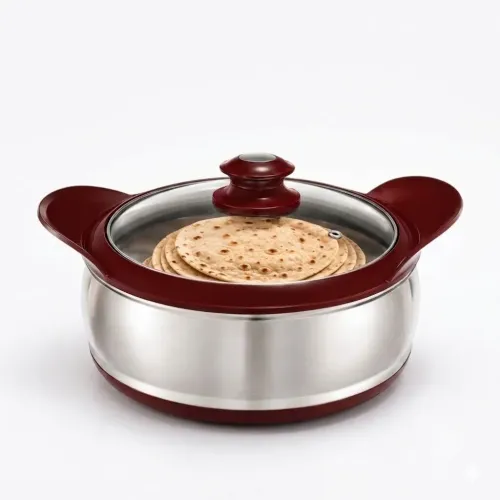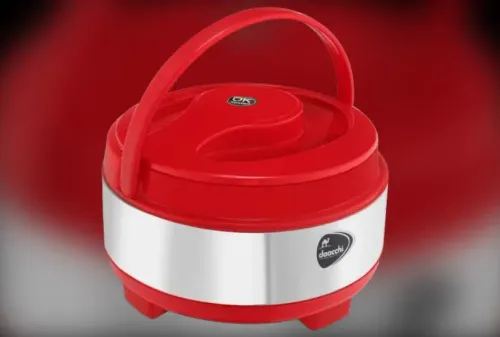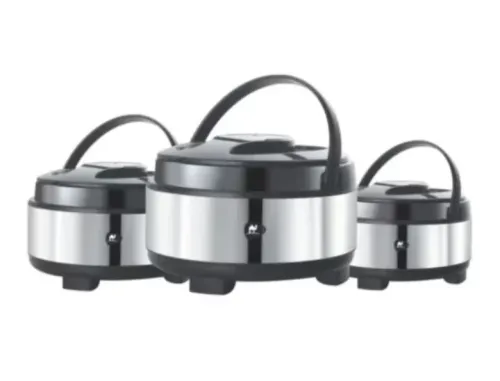
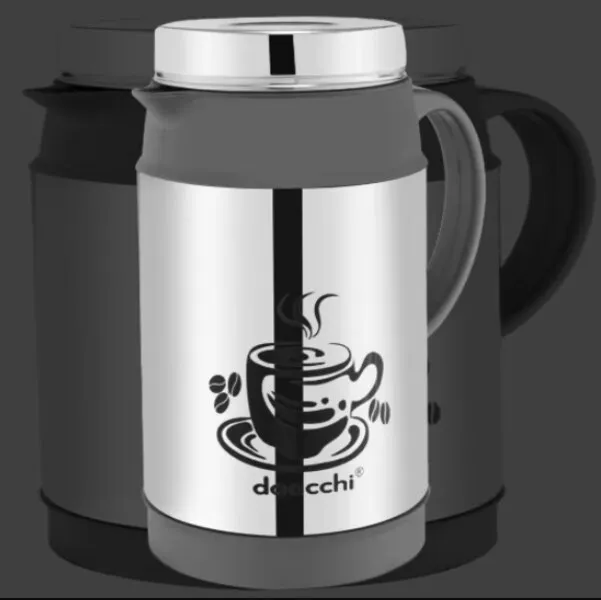
A cap-insulated serving kettle is only useful on a wet Delhi commute if its closure resists leaks, its body holds heat under stated test conditions, and its materials survive repeated washing. You will be able to compare its format, calculate serving capacity, prepare drinks safely, and specify checks that expose weak caps, gaskets, welds, and vacuum performance.
Key takeaways
- Treat cap-insulated kettles as serving containers, not stovetop appliances.
- Compare heat-retention claims by test temperature, duration and measurement method.
- Inspect the cap, gasket, rim and closure before carrying drinks in rain.
- Specify materials, cleaning requirements and acceptance tests in the supplier order.
Choose the right kettle format and serving capacity
A cap-insulated kettle is a serving container, not automatically a boiling appliance. Its vacuum body, elastomer gasket and decorative cap do not make it safe for gas, induction or electric-stove heating.
For a stainless steel kettle for hot drinks, choose a cap that matches the use: a drinking lid for one-person travel, a pour-through stopper for controlled table service, a screw cap for transport, or a removable serving top for fast refilling.
Unlike a screw-top vacuum flask, the cap-insulated format is designed around pouring and serving rather than drinking directly from the vessel.
A pump flask dispenses without removing the cap but adds a pump mechanism; an insulated jug offers quick table pouring but is less secure when tilted; an electric kettle boils water but does not provide vacuum heat retention for carrying.
A cap insulated kettle in Delhi can reduce exterior sweating around a hot drink, but insulation does not prevent condensation on cold surfaces below the dew point.
| Capacity | Approximate 150 ml cups | Practical use |
|---|---|---|
| 500 ml | 3 cups | One or two servings |
| 750 ml | 5 cups | Small meeting or commute |
| 1 litre | 6 cups | Family or desk service |
| 1.5 litres | 9 cups | Small team or table service |
| 2 litres | 12 cups | Group service |
Treat these figures as serving estimates, not brim-fill targets; leave space below the cap to limit splashing.
Read heat-retention claims as test results, not slogans
A 95°C fill gives you a meaningful starting point; a vague “keeps drinks hot” claim does not. Compare every vacuum insulated kettle under the same temperature, ambient, duration, fill level, and opening conditions, because the cap, neck, welds, and damaged vacuum become thermal bridges.
Run the comparison this way:
- Let the closed kettle and a calibrated probe reach 25°C ±2°C indoors.
- Preheat the vessel with hot water for five minutes, discard it, and drain the cap and threads. Skipping this step lets a cold inner wall steal heat from the test drink.
- Fill to the marked level with water at 95°C ±2°C. Pour slowly on a stable, dry surface, keep your hands away from the steam, and leave the headspace stated by the supplier.
- Close the cap immediately, record the starting temperature, and do not open the kettle during the six-hour test. Record a second reading at 12 hours if the claim covers overnight service.
- Compare temperature loss against an agreed acceptance limit, not against an unverified catalogue number. Repeat the test on three units if you are approving a business order.
Do not treat a cap-insulated kettle as a boiling appliance unless its specification explicitly permits heating. For an insulated kettle monsoon in Delhi, humid storage does not require special insulation technology; it demands a sealed vacuum body, corrosion-appropriate stainless steel, and a clean, dry, replaceable gasket.
Test the actual drink only after the water trial, since milk, sugar, and spices leave residues that can alter cleaning and odor performance.
Check the cap, gasket, and rim before a rainy commute
A cap that feels tight is not proof of a leak-resistant closure. For a stainless steel cap insulated kettle for monsoon in Delhi, inspect the cap, gasket, threads, and rim as one sealing system before each commute.
- Remove the cap and check the gasket for flattening, cuts, stickiness, grit, or a loose fit in its groove. Replace a damaged gasket; tightening the cap harder will not repair a sealing surface.
- Wipe the rim and cap underside, then inspect for dents, burrs, dried tea, or rust-coloured crevice staining. One grain of residue can hold the cap slightly open and create a leak path.
- Fill the kettle with cool water, fit the cap fully, and hold it upside down over a sink for 60 seconds. Repeat while tilting it about 45 degrees and rotating it through a full turn; reject any drip, wet thread, or seepage around the rim.
- Carry the closed kettle in a bag for 10 minutes, moving it as traffic would: stop, turn, lift, and set down. Open it over a sink and check the cap underside, because a seal can pass a static inversion yet leak after repeated sloshing.
- After washing, store it uncapped or fully open until the gasket groove, threads, and cap underside are dry. Trapped monsoon moisture and drink residue cause odour and biofilm even when the stainless body still looks clean.
Ask the supplier to declare the gasket material separately from the steel body. Silicone, EPDM, and thermoplastic parts differ in temperature, oil, acid, and detergent resistance.
Match the wetted materials and drink to the cleaning routine
Tea, coffee, and plain hot water suit a stainless steel kettle for hot drinks. Milk, cocoa, and sweetened beverages demand immediate washing because proteins and sugar cling inside the cap, gasket groove, and threads. Citrus juice, salted drinks, and strong brines are poor choices for prolonged storage.
| Material | Suitable use | Main risk | Cleaning response |
|---|---|---|---|
| 304 stainless steel | Tea, coffee, water | Pitting from chloride residue | Rinse and dry after every use |
| 316 stainless steel | Salty or aggressive cleaning environments | Higher cost, not stain-proof | Rinse; do not rely on the grade alone |
| Silicone gasket | Hot drinks and repeated opening | Odor retention if left wet | Remove, wash, and dry separately |
| EPDM gasket | Water-based drinks | Oil and flavor absorption | Confirm chemical compatibility with the supplier |
| Thermoplastic cap parts | Cap bodies and threads | Polymer-specific heat and chemical limits | Require the polymer name and temperature limit |
The cap’s wetted parts need their own material declaration; “stainless steel” describes neither the gasket nor the plastic. For an insulated kettle monsoon in Delhi, store it uncapped or fully open after washing until the underside, threads, gasket seat, and groove are dry. Trapped moisture creates odor, biofilm, and crevice staining.
Use warm water, mild dish detergent, and a soft brush. Never leave hypochlorite bleach or concentrated chloride cleaner on the steel; both can initiate pitting around welds and crevices.
If milk or syrup dries under the gasket, remove the gasket, clean the recess, rinse twice, and inspect for swelling, cracks, or a persistent smell before reuse.
Turn the specification into a supplier acceptance check
Accept only against a signed specification, approved drawing, and sample matching the production batch. For a cap insulated kettle in Delhi, require these records and checks:
1. Request the body steel grade, preferably 304 for normal beverage contact or 316 where chloride, salt residue, or aggressive detergent is a concern. Obtain a material declaration for the cap, gasket, liner, adhesive, and any coating; “stainless steel” does not identify every wetted part.
2. Obtain the gasket datasheet stating silicone, EPDM, or thermoplastic composition, temperature range, oil and acid resistance, cleaning compatibility, and replacement part number. Reject undocumented food-contact components.
3. Record capacity, mouth diameter, overall height, empty mass, cap thread or latch dimensions, gasket thickness, and the supplier’s vacuum-retention test method. Confirm the drawing does not describe the unit as safe for gas, induction, or electric-stove heating.
4. Test one sample from each production lot with 95°C water in a 25°C room for six hours, unopened. Record starting and ending temperatures, then repeat after opening the cap at the halfway point if your staff will serve drinks that way.
5. Fill the kettle, close it, invert it for 60 seconds, and inspect the cap, threads, seam, and gasket for drops. Check gasket compression and recovery, cap fit, weld continuity, dents, and vacuum loss; a vacuum insulated kettle can retain heat yet fail through a damaged neck or weld.
Aarav Enterprises can be asked to attach these measurements and test results to each dispatch record, giving a buyer evidence rather than a catalogue claim for a stainless steel cap insulated kettle for monsoon in Delhi.
Related product
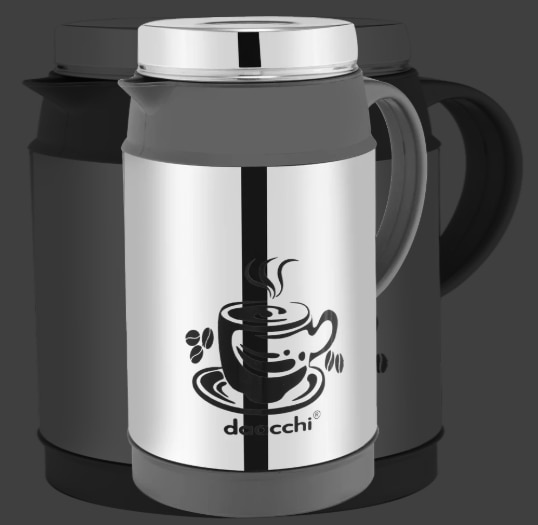 | Stainless Steel Kettle Stainless Steel Cap Insulated Kettle Stainless Steel Cap Insulated Kettle The Daacchi Stainless Steel Cap Insulated Kettle is a high-quality vacuum flask designed for superior... View product → |
Frequently asked questions
Can a cap-insulated kettle be heated on a gas or induction stove?
No. A cap-insulated kettle is a serving container unless the supplier explicitly identifies it as a stove-safe appliance with compatible construction.
How should you compare heat-retention claims for a vacuum insulated kettle?
Ask for the starting temperature, test duration, ambient temperature, fill volume, opening frequency and final measured temperature.
What should you inspect before using a stainless steel kettle for hot drinks during Delhi monsoon?
Check that the cap closes securely, the gasket sits evenly, the rim is smooth and undamaged, and no water can enter the closure.
Which materials and cleaning details should you confirm with a supplier?
Confirm the wetted stainless steel grade, gasket material, cap components, dishwasher guidance, detergent limits and cleaning access.
What belongs in a supplier acceptance check for a cap-insulated kettle?
Record capacity, dimensions, material specifications, leak testing, heat-retention test conditions, closure performance and inspection criteria.
Keywords