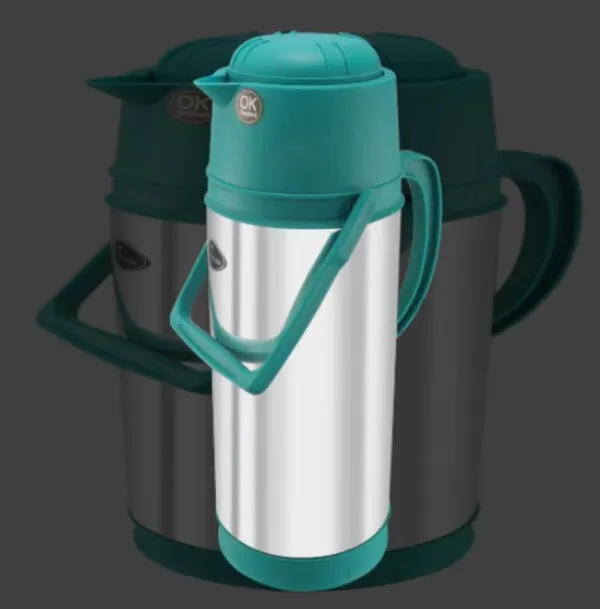
Repeated lid opening, low fill levels, cold serving cups, poor preheating, and air-conditioning can drain beverage heat faster than a closed-vessel claim suggests. You will be able to specify a kettle using a realistic service test, match its capacity to refill intervals, inspect its food-contact parts, and compare suppliers before placing an order.
Key takeaways
- Fill the kettle higher to reduce air space and slow heat loss.
- Preheat the kettle and serving cups before beverage service.
- Inspect the lid seal, welds, steel grade and food-contact documentation.
- Use multiple smaller kettles when beverage demand and opening frequency vary.
Why restaurant beverages lose heat faster than the product claim suggests
Repeated lid opening is the main service penalty: every pour replaces warm air with cooler room air and exposes the beverage surface to evaporation. Low fill volume increases the exposed internal space, while cold cups, long buffet periods, and placing the kettle beside an air conditioner pull down temperature faster.
Preheat the vessel with hot water, discard that water, and fill it close to capacity. Keep the lid closed between pours and refill in small batches only when the remaining volume justifies opening the kettle. Scale, residue, a worn seal, a dripping spout, or a lid that does not close fully can defeat good insulation.
Evaluate a claim from a controlled trial, not “keeps hot for 12 hours.” Ask for these conditions:
- Starting beverage temperature
- Ambient temperature, including air-conditioning conditions
- Fill volume and kettle capacity
- Elapsed time
- Number and duration of lid openings
- Temperature measured at the beverage, not the exterior
For a colored insulated kettle for restaurants in Delhi, repeat the trial at your counter with your opening pattern and fill level. A full, unopened vessel tested indoors is not comparable to one used through breakfast or buffet service. Check whether the target is above 57°C, the U.S.
FDA Food Code hot-holding threshold for time/temperature-control-for-safety food, or merely above a preferred serving temperature. A non-heated kettle retains warmth; it cannot replace an electric urn or bain-marie when active reheating is required.
How to operate the kettle so it holds heat through service
Preheat the kettle with hot water for five minutes, empty it, then add beverage at serving temperature. A cold vessel steals heat immediately. Fill close to its safe working level, keep the lid shut between pours, and return it to the station after every use.
- Pour only the quantity needed for the next order or table.
- Keep the kettle away from air-conditioner outlets, open doors, sunlight, and cold metal counters.
- Use clean, warmed cups for service; cold cups pull heat from the first pour.
- Refill before the level becomes low, but never mix a fresh batch into old beverage without checking taste and temperature.
Usable capacity is the volume you can safely pour without tipping, splashing, blocking the lid, or losing headspace. A kettle marked 2 litres may deliver less if its lid, spout, or anti-slosh design requires a lower fill.
| Service pattern | Capacity choice | Reason |
|---|---|---|
| Table service | Small batch sized for one round | Less time sitting open and fewer reheats |
| Breakfast buffet | Volume covering 20–30 minutes | Keeps turnover high without repeated refills |
| Meetings or room service | One serving cycle plus headspace | Limits lifting and spill risk |
| High-volume beverage station | Two smaller kettles | One stays closed while the other is poured |
For a restaurant beverage kettle in Delhi, test the actual routine: record starting temperature, fill volume, room temperature, opening frequency, and beverage temperature after service. A closed, full-vessel test does not predict performance at a busy counter.
Which construction and food-contact details deserve inspection
A colored stainless steel insulated kettle can remain hot yet fail in service because of a worn seal, blocked spout, loose handle, or residue trapped under the lid. Inspect the food-contact interior, lid underside, pour valve, seams, and base for smooth surfaces, drainage, and sharp edges—not just the exterior colour.
| Finish | What to verify | Cleaning consequence |
|---|---|---|
| PVD | Confirm the underlying grade, such as 304 or 316, and inspect for even coverage | Avoid abrasive pads; scratches expose the base and cannot be polished away invisibly |
| Electrochemical colouring | Ask for the process name and food-contact suitability of the finished surface | Check whether discolouration or wear can be repaired without stripping the finish |
| Powder coating | Confirm that the coating stays outside food-contact areas and inspect edges for chips | Damaged coating can trap moisture and residue; repairability is limited |
| Polished stainless steel | Check for welded crevices and a smooth interior | Easier to inspect, but tea, coffee, milk, sugar, and hard-water scale still need prompt removal |
- Ask for the stainless-steel grade and a cleaning method that reaches the underside of the lid, spout, and closure. A coloured finish can hide residue that polished steel would reveal.
- Fill and close the kettle, invert it briefly over a sink, then test repeated lid operation and controlled pouring. Reject leaks, drips, sticking valves, loose handles, and lids that need force.
- Confirm the usable fill level, leaving the headspace needed for safe pouring rather than assuming the advertised capacity is the service capacity. Check that seals remain removable for cleaning and replacement.
When one large kettle is the wrong choice for a busy beverage station
Choose two smaller kettles when service comes in waves, staff pour continuously, or one kettle must stay closed while the other is being refilled or cleaned. Choose one large kettle when demand is steady, storage is tight, and staff can keep the lid closed between pours.
| Option | Best service pattern | Main advantage | Main drawback |
|---|---|---|---|
| One large kettle | Table service, room service, or a small breakfast buffet with predictable demand | Fewer lids, spouts, handles, and cleaning points | One open, empty, or dirty vessel affects the whole station |
| Two smaller kettles | High-volume counters, meetings, or breakfast rushes with separate beverage peaks | One can serve while the other stays closed, hot, or in cleaning rotation | Higher purchase, storage, and maintenance cost |
| Two smaller kettles with staggered refills | Long buffet periods and uneven demand | Staff refill only the vessel approaching its usable limit | More scheduling and stock-control work |
Compare usable volume, not the advertised capacity. A 2-litre insulated kettle for restaurants may hold less safely because of headspace, pouring angle, lid clearance, or anti-slosh design.
Run the trial at the Delhi service point: use the actual beverage, fill level, air-conditioning or outdoor exposure, opening frequency, and refill pattern. Record starting and final temperatures. If the target is food-code hot holding for time/temperature-control-for-safety food, specify 57°C; a preferred serving temperature is a different target.
Two kettles do not fix poor seals, dripping spouts, or loose handles. Inspect both units.
How to compare a colored insulated kettle supplier before ordering
A reliable colored insulated kettle supplier proves repeatability, not just a polished sample. Ask for a written specification covering capacity, stainless-steel grade, closure type, cleaning method, warranty, and delivery location in Delhi.
Require these documents before ordering:
- A food-contact material declaration naming the steel grades, lid materials, seals, and any coating
- A retention-test report showing starting temperature, fill level, ambient temperature, test duration, lid openings, and final temperature
- A drawing or specification sheet with dimensions, usable capacity, inlet size, and replacement-part references
- A warranty stating coverage for vacuum failure, leaks, finish defects, lids, and seals
| Area | Ask for | Reject when |
|---|---|---|
| Finish | State whether the colour uses PVD, electrochemical colouring, powder coating, or another process; request a colour code and abrasion or cleaning guidance | The supplier calls it “coloured” but cannot explain scratch behaviour or reproduce the shade |
| Heat performance | Run a trial at your fill level with repeated service openings and record whether the drink stays above 57°C, if that is your holding target | The test uses a full kettle, unopened lid, and no ambient or time details |
| Supply | Confirm MOQ, lead time to Delhi, batch colour tolerance, replacement lids and seals, sample approval, and reorder terms | The supplier will not commit to matching the approved finish |
Aarav Enterprises should be asked for the same evidence when comparing its colored stainless steel insulated kettle with competing restaurant beverage kettles. A heat-retaining vessel is not an electric urn or bain-marie; specify active reheating separately.
Related product
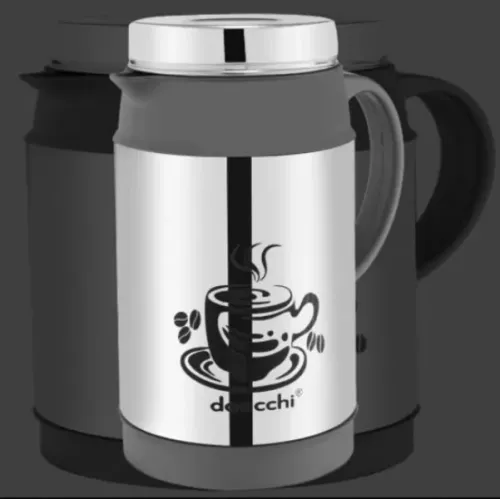
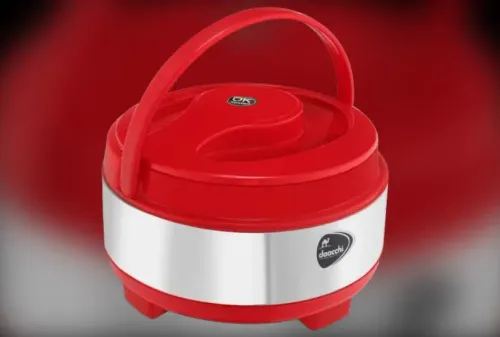
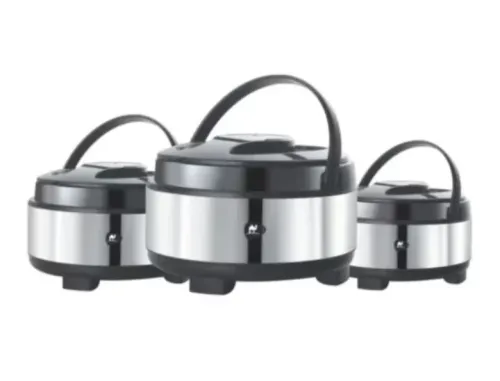
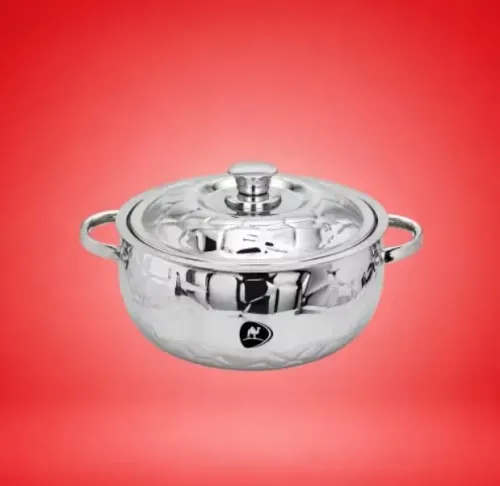
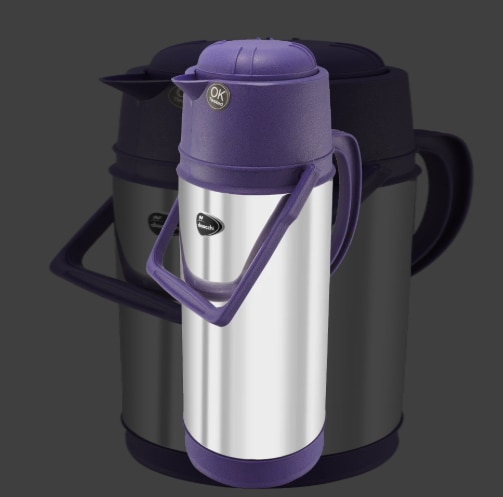 | Stainless Steel Kettle Colored Stainless Steel Insulated Kettle ₹2630 Stainless Steel Kettle The Daacchi Stainless Steel Kettle is a premium-quality insulated kettle designed to keep beverages hot and fresh for extended... View product → |
Frequently asked questions
Why do restaurant beverages lose heat faster than the product claim suggests?
Repeated lid opening replaces warm internal air with cooler room air and exposes the beverage to evaporation. Low fill levels, cold cups, long buffet periods and air-conditioning drafts increase heat loss.
How should you operate an insulated kettle to hold heat through service?
Preheat the kettle, fill it closer to its working capacity, keep the lid closed between pours and avoid placing it beside an air conditioner. Warm serving cups also reduce the initial temperature drop.
Which construction and food-contact details should you inspect?
Check the stainless steel grade, lid seal, hinge, weld finish, interior seams and pouring spout. Request food-contact documentation, cleaning instructions and traceability details before ordering.
When is one large kettle the wrong choice for a busy beverage station?
Use multiple smaller kettles when the station serves different beverages, demand changes by period or staff must open one container repeatedly. Smaller units reduce unnecessary exposure and keep replenishment flexible.
How can you compare a colored insulated kettle supplier before ordering?
Compare tested heat-retention results, usable capacity, replacement-part availability, finish durability, food-contact documents, minimum order quantity and delivery support in Delhi.
Keywords