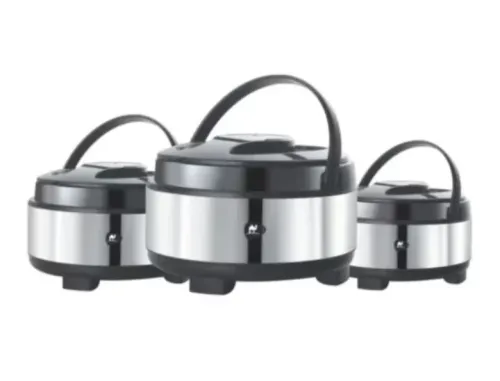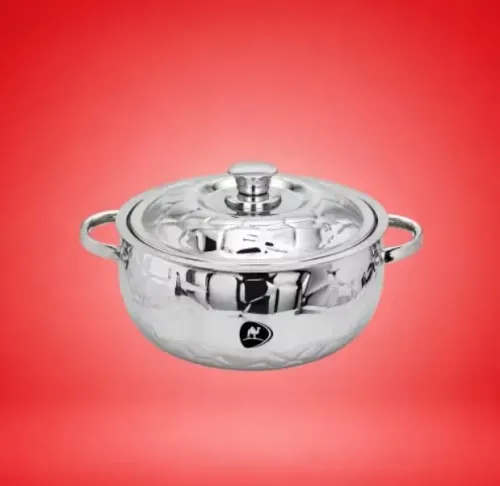
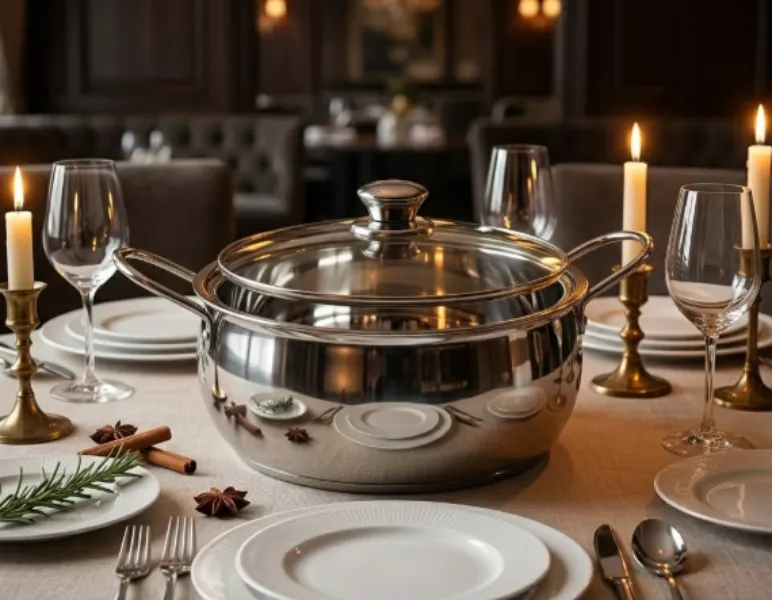
Casseroles remain a familiar part of Indian kitchens because serving food at the table often involves maintaining warmth while keeping dishes covered and presentable. For wholesalers and retailers, however, choosing casseroles is not simply a matter of selecting attractive designs.
Understanding construction, insulation, lid fit, capacity, finish, cleaning requirements, and target customer preferences can help buyers make better sourcing decisions.
A Stainless Steel Casserole Manufacturer in Ghaziabad may serve several types of customers, ranging from household product dealers to gifting companies and catering suppliers. Each segment can value different product characteristics.
What is the purpose of an insulated casserole?
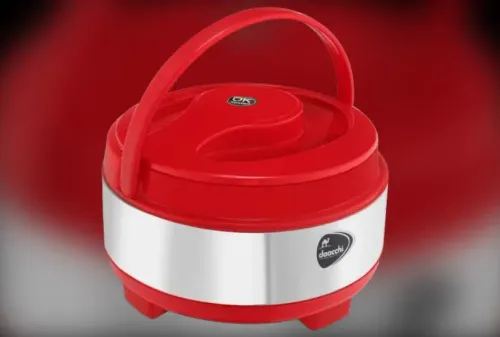
An insulated casserole is designed to reduce the rate at which food exchanges heat with its surroundings. It can therefore help keep freshly prepared food warm for longer than an ordinary uncovered serving vessel under comparable conditions.
Actual heat retention depends on construction, food temperature, ambient conditions, quantity, opening frequency, and other usage factors. Commercial buyers should therefore evaluate product specifications rather than assuming identical performance across all casseroles.
Inner construction deserves attention
The food-contact interior is central to the product. Stainless steel is commonly selected because it combines durability with convenient cleaning and a familiar kitchenware appearance.
Before bulk sourcing, buyers can examine the inner bowl for surface consistency, smoothness, depth, capacity, and accessibility for cleaning.
The relationship between the inner container and insulated outer body should also feel appropriately constructed. Loose-fitting components or unnecessarily complicated designs can reduce the overall perception of quality.
Lid design affects everyday convenience
A casserole may be opened several times during a meal, so lid handling should be simple. Buyers should assess the grip, fit, opening movement, and overall design.
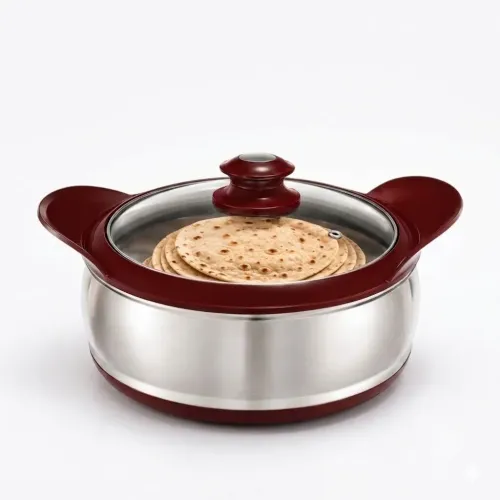
Glass-lid models can offer visibility, while other insulated lid formats may be preferred for different applications. Neither option is automatically right for every customer.
Capacity selection can improve sell-through
Different households need different casserole sizes. Smaller models can suit side dishes or compact families, while larger capacities may be useful for rice, rotis, curries, or gatherings.
Dealers can use customer buying patterns to determine whether individual casseroles or coordinated size ranges are more appropriate.
Ghaziabad's position within Uttar Pradesh and the Delhi NCR consumer market creates demand across residential retail, wholesale distribution, catering supply, gifting, and online channels. Product ranges that accommodate these different segments can provide dealers with broader selling opportunities.
Packaging should not be ignored
Packaging protects the product during handling, transportation, warehousing, and retail display. It also communicates important product details before the customer opens the box.
For e-commerce distribution, packaging becomes particularly important because products may move through several logistics stages.
Aarav Enterprises operates in the stainless steel kitchenware and insulated houseware manufacturing segment and serves trade buyers evaluating casserole and related household product categories.
For commercial buyers, a useful casserole range is built by considering the complete product: construction, insulation, capacity, lid functionality, appearance, cleaning convenience, packaging, and supply consistency. These fundamentals provide a stronger basis for sourcing than simply choosing the design with the most decorative finish.
Keywords