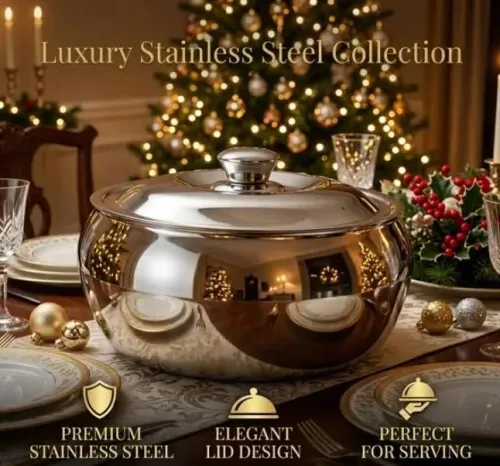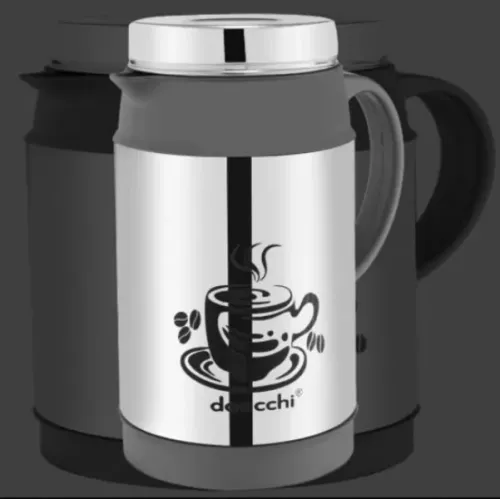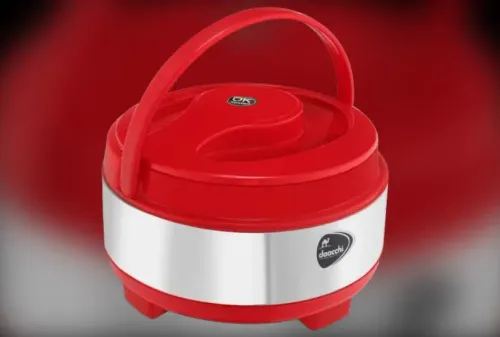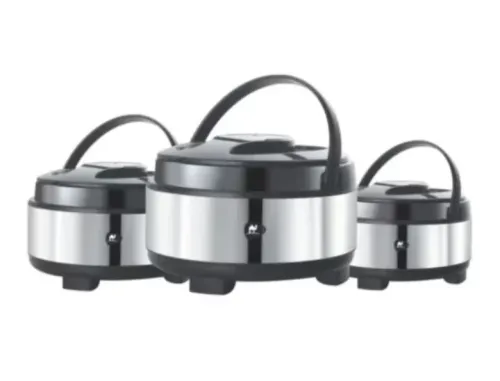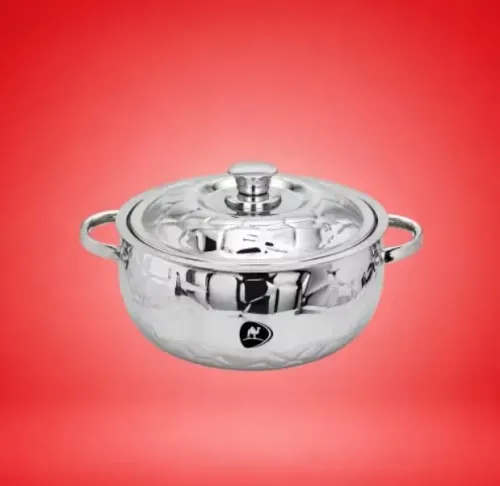
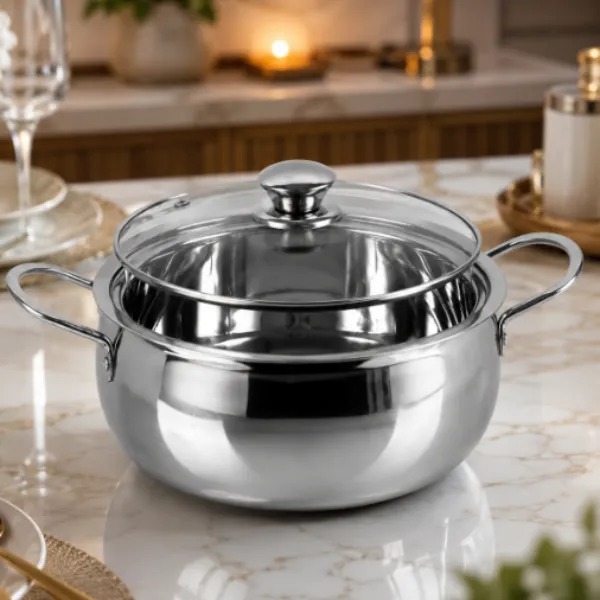
A glass lid can change both the appearance and everyday functionality of a casserole. Customers can view the contents without immediately removing the lid, while the combination of stainless steel and glass can create a contemporary serving style.
For commercial buyers, however, a Stainless Steel Casserole with Glass Lid in Ghaziabad needs to be assessed beyond visual appeal. Bulk orders should take into account construction, handling, packaging, capacity, replacement considerations, and the intended retail channel.
Check the glass lid construction first
Because glass requires different handling from stainless steel, buyers should understand the lid specification and inspect representative samples.
Look at the fit between the lid and casserole body, the handle or knob, rim finishing, and ease of placement and removal.
The product should also include appropriate care information so retailers can communicate handling requirements accurately to customers.
Inspect the stainless steel interior
The inner food-contact surface should be evaluated for finish consistency and practical cleaning.
For insulated casserole designs, understand how the stainless steel inner section is incorporated into the complete body. Commercial buyers should request clear specifications rather than making assumptions based on photographs.
Choose capacities that match actual demand
Capacity planning is particularly important for dealers.
Smaller casseroles may be suitable for side dishes and compact households. Larger models can accommodate family meals or food served during gatherings. Coordinated sets can appeal to customers who prefer matching tableware.
Before ordering, review existing sales patterns where possible. A balanced range usually performs better than buying equal quantities of every available capacity without considering customer demand.
Packaging deserves extra scrutiny
Glass-lid casseroles require careful packaging because the product combines materials with different handling characteristics.
Bulk procurement managers should evaluate how the lid is protected inside the package and how the complete product is secured during transportation.
E-commerce sellers should pay particular attention to this factor because parcels can pass through several distribution points.
Assess supplier readiness
Before confirming commercial quantities, clarify:
- Product specifications
- Available sizes
- Order quantities
- Packaging configuration
- Dispatch expectations
- Product consistency
- Repeat-order availability
- Commercial terms
These points provide a better picture of supplier readiness than a catalogue alone.
Ghaziabad in Uttar Pradesh forms part of the larger Delhi NCR trade ecosystem, giving kitchenware businesses access to residential consumers, retailers, wholesalers, online sellers, gifting companies, and hospitality buyers.
Aarav Enterprises manufactures stainless steel kitchenware and insulated houseware and can be considered by businesses evaluating casserole supply for these channels.
Order according to selling channel
A physical kitchenware retailer can assess how the casserole looks on the shelf and whether customers can easily understand its features. Online sellers need accurate dimensions, capacity details, care instructions, and product imagery. Corporate gifting buyers may focus more heavily on presentation and packaging.
The same casserole can therefore require different commercial preparation depending on where it will be sold.
Before committing to volume, buyers should align product specifications with their actual customer base. A well-finished glass lid may attract attention, but consistent construction, useful capacities, suitable packaging, clear product information, and reliable replenishment determine whether the product works as a sustainable retail category.
Keywords