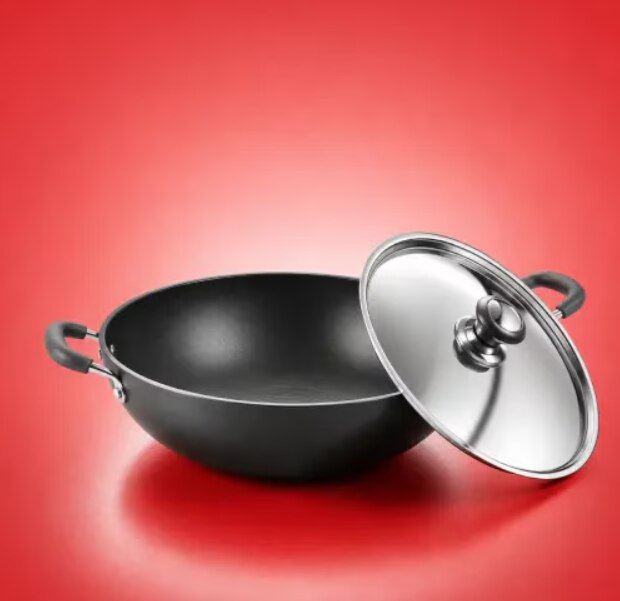
Food sticking usually starts before the first ingredient touches the pan: the kadai is cold, crowded, wet, or running too hot. You will learn how to correct the cooking sequence, judge whether this style of kadai suits your meals, and verify the specifications that determine whether it will keep performing.
Key takeaways
- Preheat on moderate heat, dry ingredients, and use a thin oil film.
- Avoid overcrowding; trapped steam makes food tear instead of sear.
- Choose a working size that leaves ingredients in one loose layer.
- Ask Delhi suppliers about coating details, size, warranty, and replacement terms.
Fix the cooking sequence before blaming the coating
Stop food sticking by controlling the cooking sequence before judging the coating. A non stick kadai for sticking food still needs moderate heat, dry ingredients, enough space, and a thin film of oil; overcrowding traps steam and makes food tear instead of sear.
- Preheat the kadai briefly on low to medium heat. Do not heat it empty for several minutes or use high heat, because non-stick cookware is not designed for prolonged empty heating.
- Add the measured oil after preheating, then swirl it across the cooking surface. Excess oil will not fix a cold pan.
- Dry vegetables, paneer, fish, or meat with a towel. Water cools the surface and creates steam.
- Add a small batch and leave protein undisturbed until its underside sets. Moving it immediately can pull away the surface that has begun to release.
- Lower the burner when adding dosa batter, jaggery mixtures, or a thick gravy. Stir reduced mixtures frequently; concentrated sugar and solids bond quickly.
- Clean and dry the surface before the next batch. Burnt residue acts like glue.
Run a controlled comparison before rejecting a black Rynox kadai: use the same food, oil quantity, burner setting, and batch size. “Black Rynox” describes neither the non-stick chemistry nor its performance, so request the coating type and maximum-use temperature rather than treating the colour as proof of quality.
Know which foods still need careful handling
Eggs, paneer, fish, dosa batter, jaggery mixtures, and reduced gravies are the foods most likely to stick, even on a sound non-stick surface. Wet ingredients, concentrated sugar, delicate proteins, and a pan crowded beyond its usable base create trouble. Let the surface set before turning food, and keep the burner at moderate heat.
Handle these foods with extra care:
- Eggs: add them after a light film of oil and move them only after the edges firm.
- Paneer and fish: pat them dry, leave space between pieces, and turn once the underside releases.
- Dosa batter: spread it on a properly heated, lightly oiled base; a damaged or uneven surface will tear it.
- Jaggery mixtures and reduced gravies: stir continuously as moisture falls, because concentrated sugar and solids scorch quickly.
A black Rynox kadai suits everyday home cooking if its actual coating, base, and heat limit support the job. “Black Rynox” describes neither the coating chemistry nor its performance, so confirm whether it uses PTFE or ceramic sol-gel before buying.
| Task | Suitability | Handling point |
|---|---|---|
| Tadka | Good | Use moderate heat; do not empty-preheat for long |
| Sautéing and shallow frying | Good | Dry ingredients and avoid overcrowding |
| Curries and gravies | Good | Stir during reduction |
| Reheating | Good | Use low to medium heat |
| High-temperature searing | Poor choice | Non-stick coatings are not designed for prolonged maximum heat |
Match the kadai’s working size to your household
A two-person kitchen rarely needs the largest pan. Compare the usable cooking diameter, not the outer rim: sloped walls, a thick edge, and stirring space reduce the food area. Request the internal base diameter, wall depth, and measured volume before choosing a black Rynox non-stick kadai for a home kitchen in Delhi.
| Household | Usable diameter | Practical capacity | Working specification |
|---|---|---|---|
| Two people | 24–26 cm | 1.5–2.5 litres | About 6–8 cm internal depth; lighter body for daily tadka, sautéing and reheating |
| Four people | 28–30 cm | 3–4 litres | About 8–10 cm internal depth; enough room to stir curry without spilling |
Capacity is only useful if the measurement is stated. Ask whether it means brim-full volume or safe cooking volume; leave headroom for bubbling gravies and tossing vegetables.
Weight affects handling more than advertised size. Choose a body you can lift safely with food inside, and check that the main handle stays cool, has a firm riveted or welded joint, and leaves clearance from the adjacent burner. A helper handle matters for a 28–30 cm kadai.
A well-fitting lid reduces splatter and speeds reheating, but confirm that its knob and rim suit storage.
For induction, black colouring, stainless steel, or insulated construction proves nothing. Confirm the compatible hob types and base diameter, then test the underside with a magnet when the kadai arrives; attraction indicates a magnetic base, not guaranteed performance.
Verify the coating and protect it from early damage
A black exterior or the word Rynox does not identify the non-stick surface. Ask for the exact coating chemistry, such as PTFE or ceramic sol-gel, the number of coating layers, the substrate metal, the maximum temperature, and food-contact documentation. Match these details to the quoted model and sample; colour and photographs prove none of them.
Protect the coating from these avoidable causes of early wear:
- Use silicone or wooden utensils; metal edges and sharp tools can cut the surface.
- Keep the burner within the maker’s temperature limit, and never heat the empty kadai on high or let flames climb its sides.
- Wash it after cooling with a soft sponge and mild liquid detergent. Abrasive pads, scouring powder, strong alkaline dishwasher detergent, heat, and repeated mechanical washing shorten coating life even when the label says “dishwasher safe.”
- Store it without another pan inside it. Use a soft separator if nesting is unavoidable, because the base or rim of the upper pan can scratch the cooking surface.
Stop using the kadai if you see blistering, peeling, exposed metal, or a rough patch. Test suspected sticking with the same food, oil quantity, burner setting, and batch size used in a comparable pan. If the surface still grips food under that controlled test, document the defect and batch number before requesting replacement.
Use a supplier checklist before buying in Delhi
Get the quotation, sample and invoice to identify the same item. “Black Rynox” describes a name or finish, not the coating system, diameter or performance. Record the exact model code, diameter, depth, capacity, substrate metal, handle construction, lid, base and induction compatibility.
1. Match the supplied sample to the quotation and product photographs. Note colour, logo, dimensions, weight and included parts; marketplace wording is not proof of specification.
2. Request the coating declaration: PTFE or ceramic sol-gel, number of layers, substrate preparation, maximum-use temperature and empty-pan heating instructions.
3. Ask for food-contact documentation, such as a declaration of compliance and migration test report, identifying the coating and intended food-contact use.
4. Inspect the sample under bright light for blisters, pinholes, fisheyes, exposed metal, uneven coverage, edge chips and coating lifted around rivets or the rim.
5. Require the batch or lot number on the product or carton, then record it against the invoice, manufacturing date and supplier contact. This creates traceability if a later shipment fails.
6. Run a controlled cooking check using the same food, oil quantity, heat setting and batch size. Eggs, paneer or a reduced gravy expose sticking more clearly than a lightly oiled vegetable stir-fry.
7. Write replacement terms into the purchase order: defect-reporting period, acceptable evidence, freight responsibility, replacement timeline, and whether the supplier replaces one kadai or the affected batch.
8. Confirm packaging protects the rim and cooking surface from abrasion during Delhi transport.
Aarav Enterprises belongs on your comparison sheet only after it provides these records for the quoted model, not because its catalogue photograph looks identical. A black non stick kadai supplier in delhi that will not document coating, batch and replacement terms leaves you carrying the failure risk.
Related product
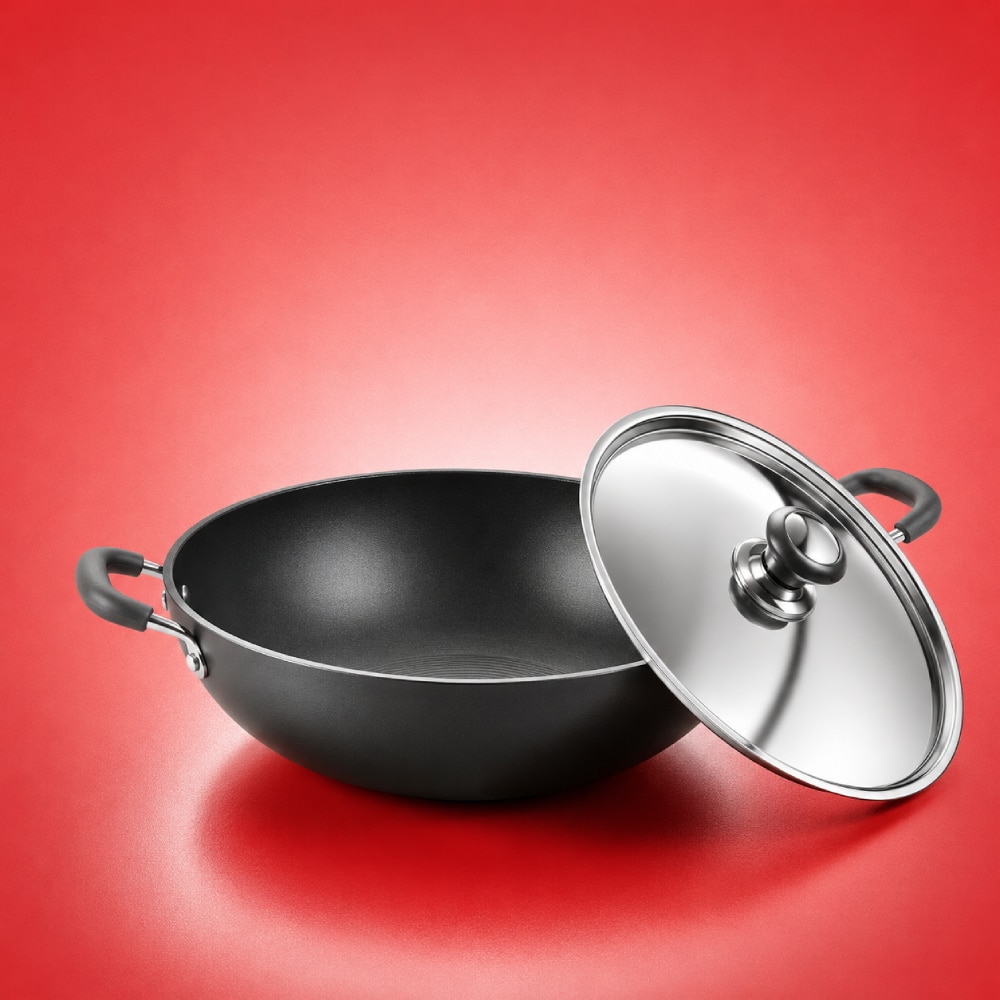 | Non Stick Pan ₹205 Black Rynox Non Stick Kadai The Daacchi Black Rynox Non Stick Kadai is a durable and stylish kitchen essential designed for effortless cooking and... View product → |
Frequently asked questions
How can you reduce food sticking in a non-stick kadai?
Use moderate heat, dry ingredients, enough space, and a thin film of oil. Add food after the kadai is ready and avoid overcrowding, which traps steam.
Which foods need extra care in a non-stick kadai?
Eggs, fish, paneer, sticky sauces, and foods with sugary marinades need careful heat control, enough oil, and gentle utensils.
How do you choose the right kadai size for home cooking?
Match the working size to your usual batch. Leave space for stirring and keep ingredients in a loose layer instead of filling the kadai to the rim.
How can you protect a black non-stick kadai from early damage?
Use silicone, nylon, or wooden utensils, avoid metal scrubbers, prevent empty high-heat heating, and follow the maker’s cleaning instructions.
What should you check before buying from a black non-stick kadai supplier in Delhi?
Request the exact diameter, depth, base construction, coating details, induction compatibility, warranty terms, care instructions, and replacement policy.
Keywords