A 3000ml casserole dents when a thin, unsupported section receives more force than its steel can absorb, and busy transport or restaurant storage can supply that force repeatedly. You will learn how to identify the design weaknesses, inspect a shipment, reduce handling damage, and separate a harmless crease from a failure that affects hygiene or insulation.
Key takeaways
- Large casserole walls dent because broad unsupported panels concentrate impact.
- Check wall thickness, rim strength, lid fit, welds, and finish before accepting bulk orders.
- Use padded trolley rails, shelf liners, and separated stacking to prevent handling dents.
- Replace a casserole when dents affect sealing, stability, cleaning, or food safety.
Why a large casserole shell takes a permanent dent
A 3000ml capacity rating describes volume, not shell strength. The broad sidewall and lid of a large casserole have a longer unsupported span than those of a smaller vessel, so a counter edge, trolley rail, shelf corner, or another vessel can concentrate force on one small area.
Once that pressure exceeds the sheet’s yield strength, the metal stays deformed after the force is removed.
The stainless steel casserole dent problem becomes worse when the sheet is thin because shell bending stiffness rises approximately with the cube of thickness. Dent resistance also falls with a wide flat panel, a soft or low-strength grade, or a double-wall design whose thin outer shell lacks adequate support.
An outer dent can leave the inner food-contact liner intact, but damage near a spacer or seam can affect insulation.
Delhi itself does not chemically soften stainless steel. The more plausible causes behind 3000ml stainless steel for casserole denting in Delhi are unloading impacts, crowded storage, repeated stacking, and hot-to-cold handling. Stainless steel expands by roughly 16–17 × 10⁻⁶/K, so repeated washing can stress restrained walls, welds, handles, or spacers.
That is an aggravating factor, not an explanation for every dent. Inspect dents near the rim, base edge, weld, handle joint, or spacer carefully; they matter more than shallow marks at the sidewall centre.
Which construction details control dent resistance
A 3000ml capacity rating tells you volume, not dent resistance. Ask for the declared stainless steel grade, gauge or sheet thickness in millimetres, and separate figures for the body, lid, base, rim, and handles. SUS 304 names a grade; it does not reveal thickness, temper, forming history, or support from a second wall.
Before ordering, request these details in writing:
- Whether the vessel is single-wall or double-wall, and whether the outer shell is thin and unsupported
- Whether the rim is rolled, folded, or flat
- Whether the base has a reinforcing plate or ring
- Whether the lid is metal or glass
- Whether ASTM A240 applies to the sheet material; it sets material and mechanical requirements for stainless sheet, plate, and strip, not impact performance of the finished casserole
Construction detailBetter dent resistanceWhat to checkBody shapeNarrow, curved wallBroad flat panels have more unsupported spanRimRolled or folded rimA flat exposed edge concentrates impactBaseReinforced baseA plain base transmits contact force directlyLidMetal lidIt tolerates edge impacts better, but can load the lid lipWall designSupported double wallA thin outer shell can still dent between supports
Cold forming can strengthen a rim while leaving the broad wall vulnerable. This explains why two 3000ml casseroles can perform differently and why a restaurant casserole durability problem is not solved by grade name alone. Buyers comparing quotations, including from Aarav Enterprises, should compare these figures rather than accept “durable.”
Related products
 Stainless Steel Kettle
Stainless Steel Casserole (3000ml)
Stainless Steel Casserole (3000ml) The DAACCHI Stainless Steel Casserole (3000ml) is a premium double-wall insulated serving bowl designed to keep...
View product → Stainless Steel Hot Pot And Casseroles
Stainless Steel Casserole With Glass Lid
₹755
Stainless Steel Casserole With Glass Lid The DAACCHI Stainless Steel Casserole With Glass Lid is a premium insulated serving solution designed to...
How to inspect a bulk order before accepting it
Before signing for a bulk shipment, inspect every 3000ml casserole for 3000ml casserole damage, not just the cartons. Start at the rim and look from above for ovality, uneven rolling, flat spots, or a gap between the lid and body.
CheckHow to inspectReject or quarantine whenRim and basePlace the vessel on a hard, level surface and press opposite edges.It rocks, indicating a distorted base or bottom ring.SidewallUse angled light across the widest wall.You find ripples, sharp creases, scraped metal, or a local depression.Welds and handlesExamine joints closely and move each handle gently.You find pinholes, incomplete fusion, cracking, loose movement, or metal pulled into a crease.Lid fitFit every lid and rotate or close it as designed. Measure the gap around the full circumference.A dent prevents normal seating or the lid sits unevenly.InsulationCompare heat retention with an undamaged sample when a dent lies near a seam, spacer, or vacuum boundary.Heat retention is clearly worse, suggesting lost insulation.
Record photographs, carton numbers, batch numbers, vessel dimensions, and the affected-unit count before signing delivery documents. Reject or quarantine any vessel with sharp edges, an unstable base, a failed lid fit, an exposed seam, or suspected insulation loss.
How Delhi restaurants create and prevent handling dents
Delhi delivery routes, braking, unloading, crowded storage, and repeated stacking create higher dent risk than ambient weather alone. A restaurant casserole durability problem usually begins when a broad sidewall, rim, base edge, handle joint, or lid lip meets a hard point.
1. Move full vessels on a trolley with a flat, padded deck. Use a crate sized to prevent sideways movement, and secure cartons so braking and unloading cannot turn casseroles into projectiles.
2. During Delhi transport, separate every casserole with cardboard dividers or foam sleeves. Fit a collar around each rim, cushion each base, keep pressure off lids and handles, and never place heavy cartons directly on top of the lid stack.
3. At the restaurant, do not drop a full 3000ml vessel, strike it against a counter or sink, drag it across a metal shelf, or stack hot vessels before they cool. Do not over-tighten a lid or force a misaligned lid onto a dented rim.
4. Store each large casserole with its base supported across its full footprint, not on a narrow rail. Train staff to lift by the body or designed handles, never by a loose lid.
A smooth, shallow sidewall dent is usually cosmetic if the vessel remains stable and the lid fits. A crease at the rim, base, seam, or handle can affect stability, sealing, insulation, or safe handling, turning minor 3000ml casserole damage into a replacement decision.
When a dent means replacement rather than appearance damage
A shallow dent away from the rim, base, welds, handles, and food-contact liner is cosmetic when the casserole sits flat, the lid fits evenly, and heat retention matches an intact unit. That is the usual answer to the stainless steel casserole dent problem.
Remove it from service if any of these conditions apply:
- The body has a sharp crease or exposed cut edge.
- The base rocks on a level surface.
- The rim is oval or the lid binds.
- A handle joint moves.
- The vessel cannot be cleaned, carried, stacked, or closed without force.
A dent near a vacuum boundary needs a heat-retention check against an undamaged casserole. The outer shell can deform while the liner remains intact, but a dent near a seam, spacer, or neck can also indicate lost insulation; appearance alone cannot prove that the vacuum still works.
A smooth crease with scraped metal indicates impact, not corrosion. A pinhole, blister, rust-coloured pit, or rough spot points to pitting or seam failure. Check chloride cleaners, bleach, salt deposits, and stagnant food residues separately because they can cause pitting or tea-staining.
Do not hammer the shell back into shape. The impact can damage the liner, weld, vacuum space, or food-contact surface. Quarantine, photograph, and replace any unsafe unit. The 3000ml stainless steel for casserole denting in delhi question requires this serviceability check, not an appearance-only decision.
Frequently asked questions
- Why does a large 3000ml stainless steel casserole take a permanent dent?
- Its broad sidewall and lid have a longer unsupported span, so an impact from a counter edge, trolley rail, shelf corner, or another vessel concentrates force in one area.
- Which construction details control casserole dent resistance?
- Inspect the stainless steel grade, wall thickness, reinforced rim, lid design, weld quality, base construction, and the amount of unsupported panel between structural edges.
- How should you inspect a bulk casserole order before accepting it?
- Check every unit for dents, sharp edges, distorted rims, loose handles, poor welds, unstable bases, lid gaps, and scratches that expose or weaken the surface.
- How can Delhi restaurants prevent handling dents in large casseroles?
- Pad trolley rails, protect shelf corners, avoid dropping vessels into stacks, separate units with liners, and train staff to carry them by secure handles.
- When does a casserole dent require replacement?
- Replace it when the dent prevents the lid from sealing, makes the vessel unstable, creates a sharp or cracked area, traps food, or makes cleaning and sanitising unreliable.
Related products
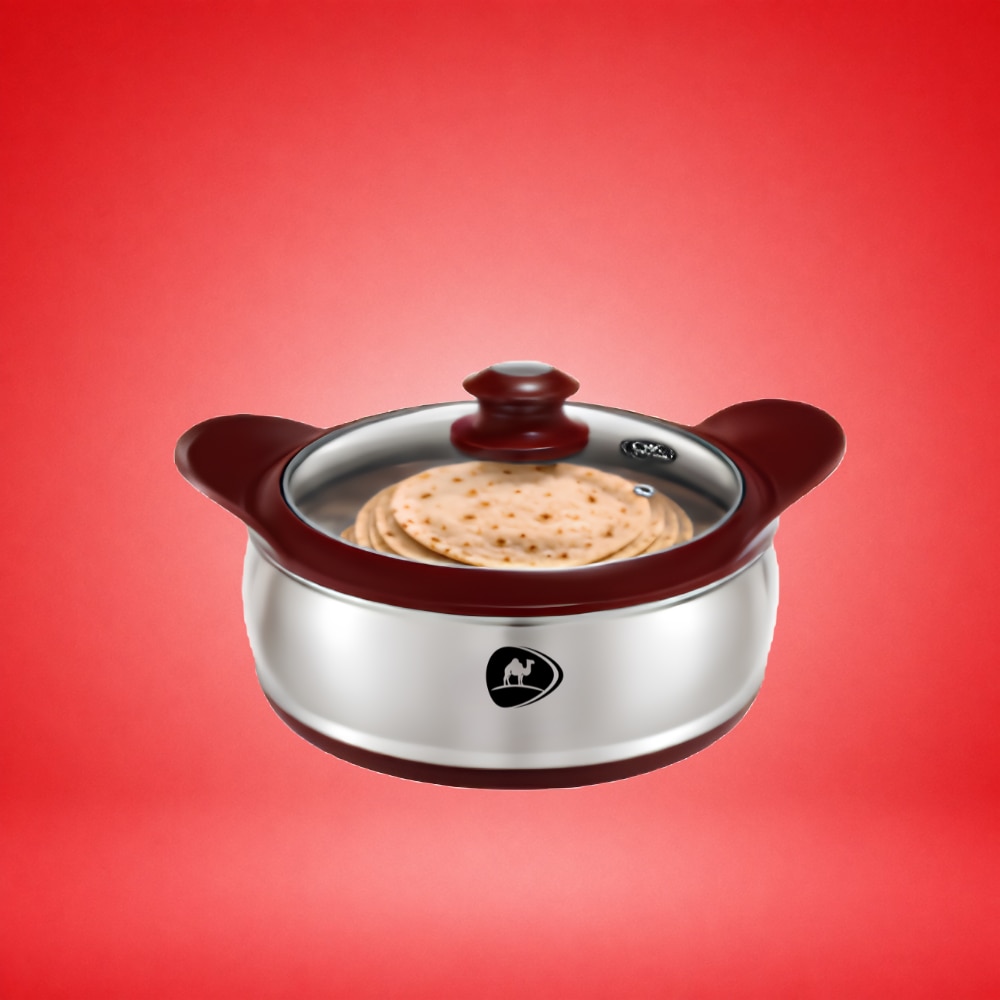 Stainless Steel Hot Pot
Round Stainless Steel Insulated Casserole
₹565
Round Stainless Steel Insulated Casserole The Daacchi Round Stainless Steel Insulated Casserole is a stylish and durable food serving solution...
View product →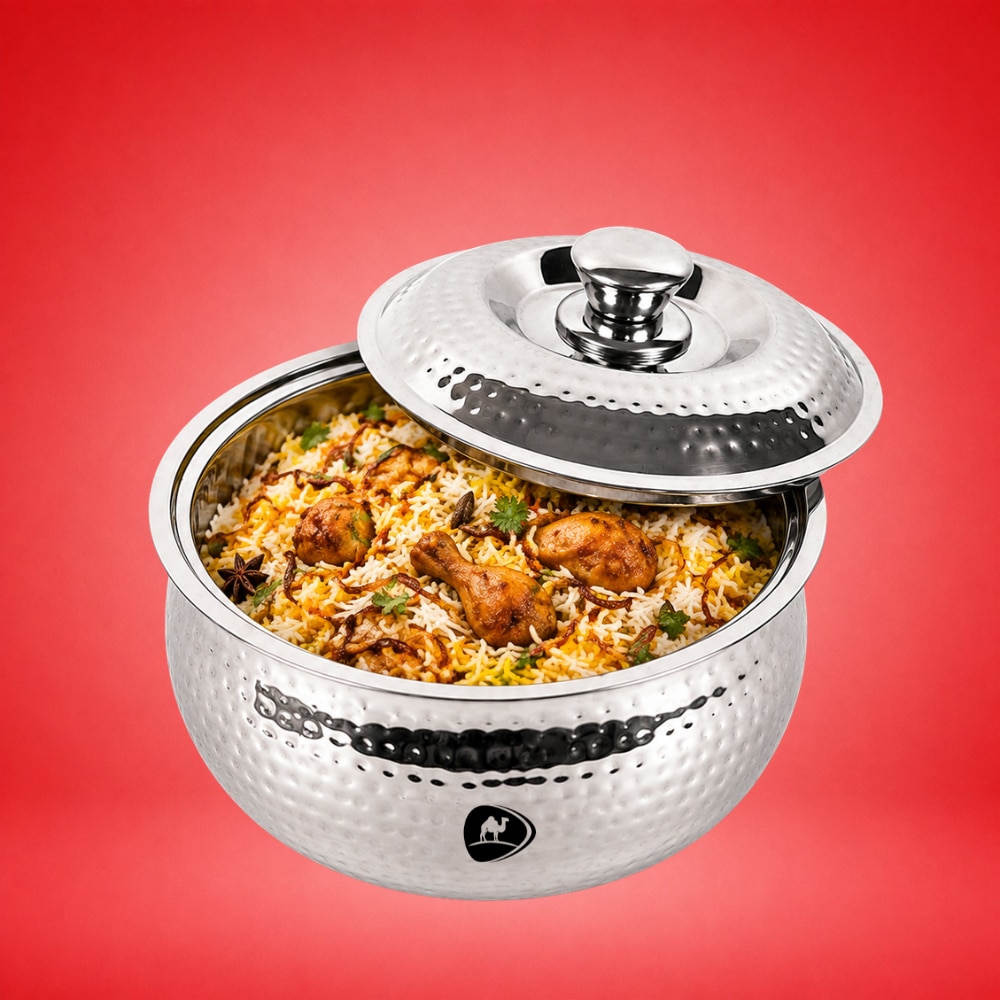 Stainless Steel Hot Pot
Daacchi Silver Stainless Steel Insulated Casserole
₹835
Daacchi Silver Stainless Steel Insulated Casserole The Daacchi Silver Stainless Steel Insulated Casserole is a premium-quality serving solution...
View product → Stainless Steel Casserole
Hot Pot Casserole with Lid The Daacchi Hot Pot Casserole with Lid is a stylish and durable insulated food storage solution designed to keep food hot...
View product → Stainless Steel Casserole
₹925
Insulated Casserole Hot Pot The Daacchi Insulated Casserole Hot Pot is a premium-quality food storage solution designed to keep meals hot and fresh...
Keywords