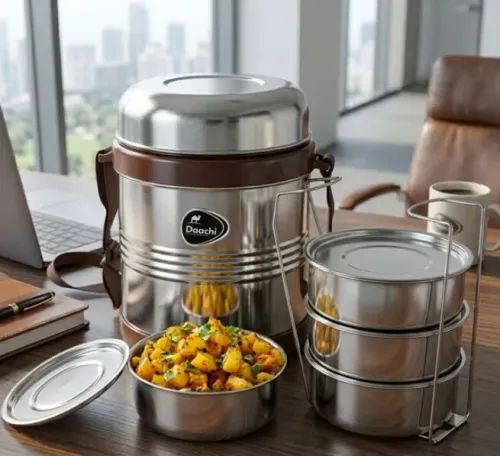
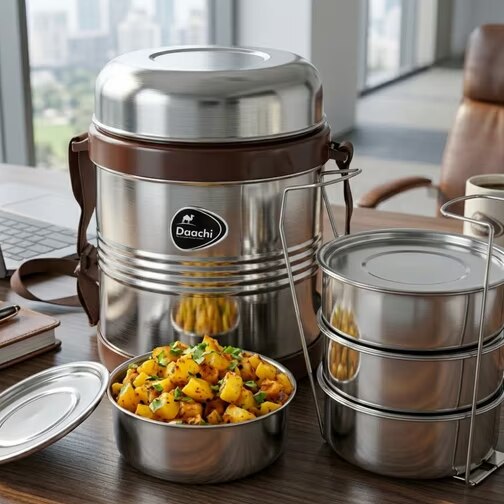
A hut tiffin can stay dry on a kitchen counter and still leak after hot food, tilting, vibration, or compression inside a commuting bag. By checking the gasket, lid, rim, filling level, temperature, and transport conditions in sequence, you can identify whether the failure comes from assembly, food movement, or a damaged closure.
Key takeaways
- Check whether liquid reaches the lid before blaming the gasket.
- Clean the gasket groove, lid channel, and vent or closure points first.
- Leave headspace in a 350 ml box and test it on its side.
- Replace a distorted seal or request manufacturer evidence for the closure design.
Is the leak coming from the seal or from liquid reaching the lid?
A hut tiffin lunch box for leaking in Delhi may pass an upright test yet leak when tilted, shaken, compressed in a bag, or carried horizontally. That does not automatically mean the closure has failed: liquid can reach the lid, wet the gasket, and escape once gravity and movement load the sealing edge.
A true closure failure leaves a path even when the box contains room-temperature water and remains still. Check these points before blaming the stainless steel wall:
- The lid-to-gasket interface, including a twisted or poorly seated gasket
- A vent, vent plug, or pressure-release opening
- Hinge or latch attachments that flex or leave one side loose
- A dented lid, warped sealing surface, or damaged container rim
Delhi’s normal atmospheric pressure is not the main cause of an airtight lunch box leaking in Delhi. Hot food expands trapped air and produces steam; cooling changes the internal pressure, while headspace, liquid movement, and bag compression create larger practical forces.
A pressure-decay test can miss a leak that appears only when liquid wets the gasket or the lid flexes.
Warm transport conditions reduce the margin further. Heat thins dal, gravies, and oils, increases sloshing during commuting, and can relax a marginal gasket. A box that holds still water upright can therefore leak after hot food cools, the bag is squeezed, or the container rides on its side.
Which parts should you inspect and clean first?
Start with the closure, not the stainless steel wall. To trace a stainless steel tiffin seal problem, open the box and remove the gasket where the design allows.
Wash the gasket and lid groove separately with mild dish detergent, rinse until no slippery film remains, and dry the gasket, groove, lid underside, vent, and steel rim completely. Aggressive scraping can create a new leak path.
Inspect these parts in order:
- Silicone or rubber gasket: look for oil film, starch, rice grains, cuts, hardening, permanent flattening, or compression set.
- Gasket splice or moulding: check for a split, raised join, thin section, or manufacturing gap.
- Lid groove and underside: remove residue beneath the sealing land.
- Valve or vent: check the plug, seat, and opening for food debris or damage.
- Hinge and latch: confirm the lid closes evenly rather than pressing harder on one side.
- Steel container rim: look for dents, bends, or a section that no longer meets the lid.
| Source | What to check | Why leakage appears |
|---|---|---|
| Gasket fit | Flat in its channel, with no twist, stretch, pinch, or section outside the groove | Uneven compression leaves a narrow open path |
| Lid or rim | Warping, dents, or residue under the sealing land | One area seals while another lifts during movement |
| Latch or hinge | Side-to-side alignment and equal closing force | Concentrated pressure causes intermittent leaks |
| Vent or moulding | Blockage, loose plug, split, or defective join | Liquid bypasses the main gasket |
Refit the gasket without stretching it. A warped lid, dented rim, trapped grain, or uneven latch force can leak only when the box tilts or vibrates, making a clean, level inspection essential.
How can a 350 ml box leak when it is not visibly overfilled?
The 350 ml hut tiffin leak problem often comes from filling geometry, not visible overfilling. The available product information does not specify a fill line or liquid limit, so do not treat 350 ml as a safe volume for dal, curry, chutney, oil, or any other free-flowing food.
Food that reaches the underside of the lid can wet the gasket and cross it by capillary action. Tilting the box lets liquid reach a vent, hinge-side gap, or compressed edge, even if the container stays dry while upright.
A small box is not automatically leakproof for liquids; airtight performance does not prove liquid resistance during inversion, vibration, or commuting.
Use this check before blaming the seal:
- Start with a clean, dry box and a smaller volume of room-temperature water, well below 350 ml.
- Close the lid fully, then check it upright, inverted, and on its side over a sink.
- Increase the water gradually and repeat all three positions after each increase.
- Mark the volume at which water first reaches the lid or escapes.
- Repeat with the food’s likely thickness and temperature before relying on the result.
Thin gravy, runny chutney, and warm oily food need a separate sealed container when they contact the lid at the tested volume. Delhi’s warm transport conditions can thin these foods further, reducing the margin that a room-temperature water test appeared to provide.
How should you test the box with heat, cooling, and commuting?
A box can pass an upright check and leak after a hot lunch reaches the road. An airtight lunch box leaking in delhi may be reacting to trapped steam, expanding air, cooling, and movement rather than to a failed stainless steel wall.
Closing it around hot food can lift a weak gasket; condensation during cooling can lower internal pressure and pull the lid down.
Use this sequence to separate a closure defect from a heat-and-transport failure:
- Place dry tissue paper around the gasket, vent, and latch area. Fill the clean box with room-temperature water, close it, and check for wet marks while it stands upright.
- Invert the box, lay it on its side, and shake it gently over a sink. Record the first wet location instead of assuming the gasket caused every leak.
- Repeat the test with a representative low-viscosity liquid at its intended serving temperature. Do not block a pressure-release vent. Allow the liquid to cool for the same interval used before commuting, then inspect the tissue again.
- Run a timed carry test. Keep the box horizontal, add normal bag vibration, place books or clothing against it to reproduce compression, and open and handle the bag repeatedly.
- Compare the result with a pressure-decay test only as supporting evidence. Air pressure can confirm gross closure leakage, but it cannot reproduce liquid wetting, sloshing, inversion, or lid flex under compression.
Delhi heat can thin gravies and oils, increase sloshing, and reduce the margin of a seal that passed with cool water.
When should you replace the seal or ask the manufacturer for evidence?
Replace the gasket when cleaning, refitting, and controlled testing do not stop the leak. A cut, split, hardened section, permanent flattening, loose fit, or visible moulding defect means the seal no longer distributes pressure evenly.
- Replace or repair the closure if the lid is warped, the steel rim is dented, the latch closes on one side, or a hinge is loose.
- Ask for the stated fill line and liquid limit; a printed capacity is not proof that dal or curry is safe at the brim.
- Ask for the permitted hot-food temperature and the vent’s operating position. Never block a pressure-release vent to hide leakage.
- Ask how to remove and replace the gasket without twisting, stretching, pinching, or leaving part of it outside the groove.
- Request test conditions covering the liquid used, starting temperature, fill volume, orientation, cooling time, vibration or compression exposure, and leak location.
- Reject evidence that says only “airtight” without naming the test duration, orientation, liquid or air condition, temperature, and vent position.
Record your own failed test beside the supplier’s claim: note whether the box was upright, inverted, or on its side, how long it cooled, and whether books or clothing compressed it during carriage. That record separates a defective closure from misuse and gives the manufacturer something reproducible to investigate.
Consider Aarav Enterprises alongside other business suppliers only if it provides clear closure-use guidance and repeatable inspection or validation records for your intended food and transport conditions. An airtight marketing claim alone does not establish liquid leak resistance.
Related product
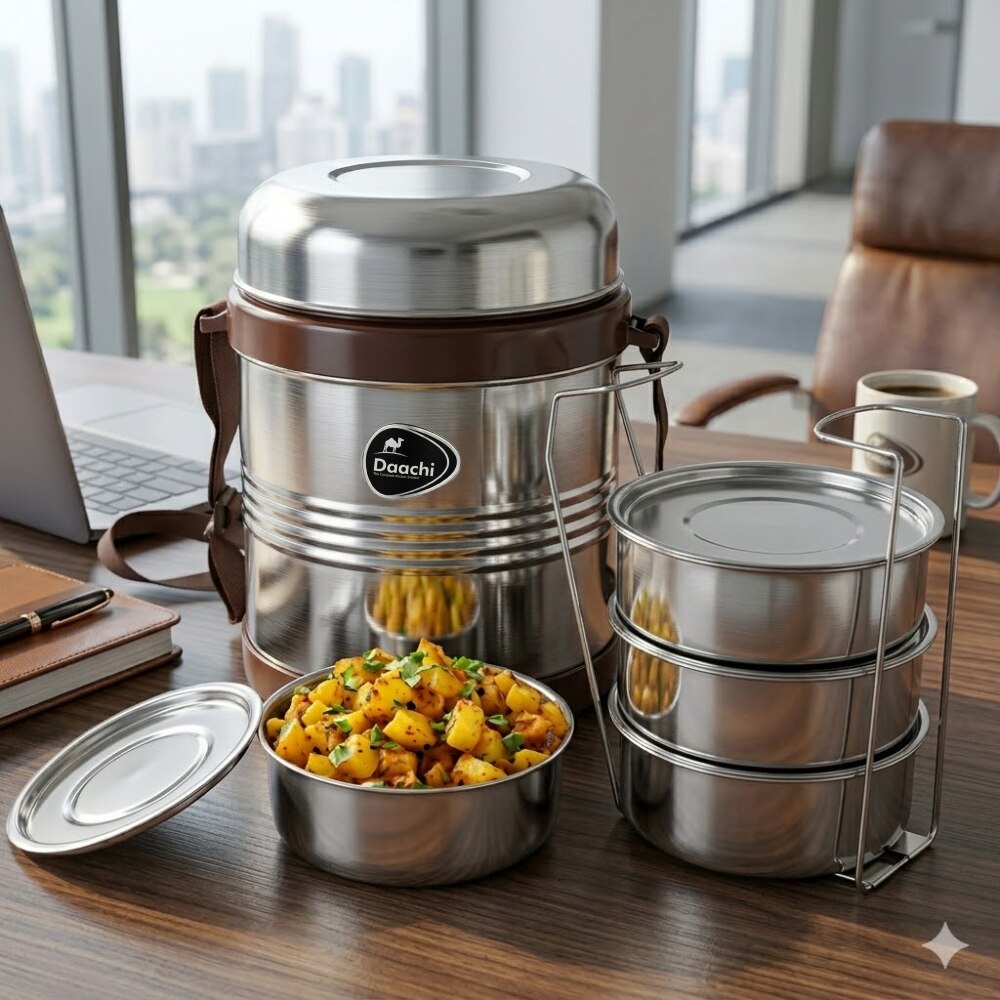 | Lunch Box 350 ml Hut Tiffin Stainless Steel Airtight Lunch Box ₹450 350 ml Hut Tiffin Stainless Steel Airtight Lunch Box The Daacchi 350 ml Hut Tiffin Stainless Steel Airtight Lunch Box is a perfect combination of... View product → |
Frequently asked questions
Is the leak coming from the seal or from liquid reaching the lid?
Dry the lid and gasket, add coloured water, and test the box upright and tilted. Liquid on the lid before the seal edge indicates splash or overfill; leakage from the closed edge indicates a sealing problem.
Which parts should you inspect and clean first?
Inspect the gasket for cuts, flattening, twisting, or hardening. Clean the gasket groove, lid channel, closure surfaces, and any vent or plug with warm water and mild dish soap.
How can a 350 ml box leak when it is not visibly overfilled?
Food occupies more volume after packing, while oil, gravy, and trapped air move during commuting. Leave headspace below the lid and prevent food from pressing against the gasket.
How should you test the box with heat, cooling, and commuting?
Test with coloured water at room temperature, then with warm—not boiling—contents after checking the product instructions. Cool it, turn it on its side, shake it gently, and carry it in a bag before checking for moisture.
When should you replace the seal or ask the manufacturer for evidence?
Replace the seal when it is cracked, permanently flattened, loose, sticky, or distorted. Ask the manufacturer for closure instructions, material details, testing conditions, and batch information when a clean, correctly filled box still leaks.
Keywords